Secret Location

From first play to show day

Three steps.
Start with play.

Step 1 · Proof of Play

Your playable virtual prototype.

CAD $15,000

Try the interaction and explore the space before committing to a physical build.

Start with Proof of Play

Then decide what to build. Each next stage is approved with you.

  1. 1Proof of PlayYour virtual prototype · CAD $15,000
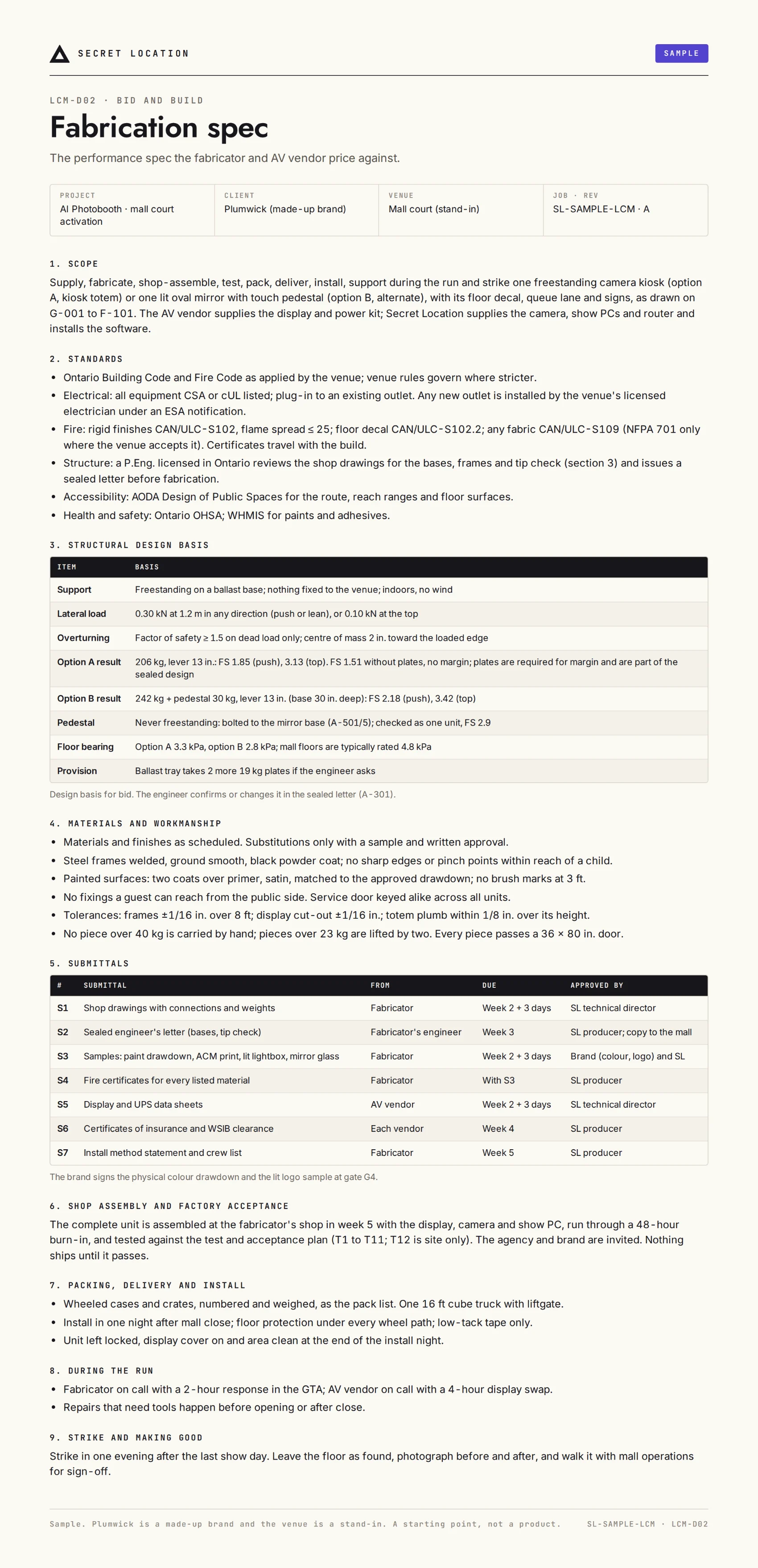
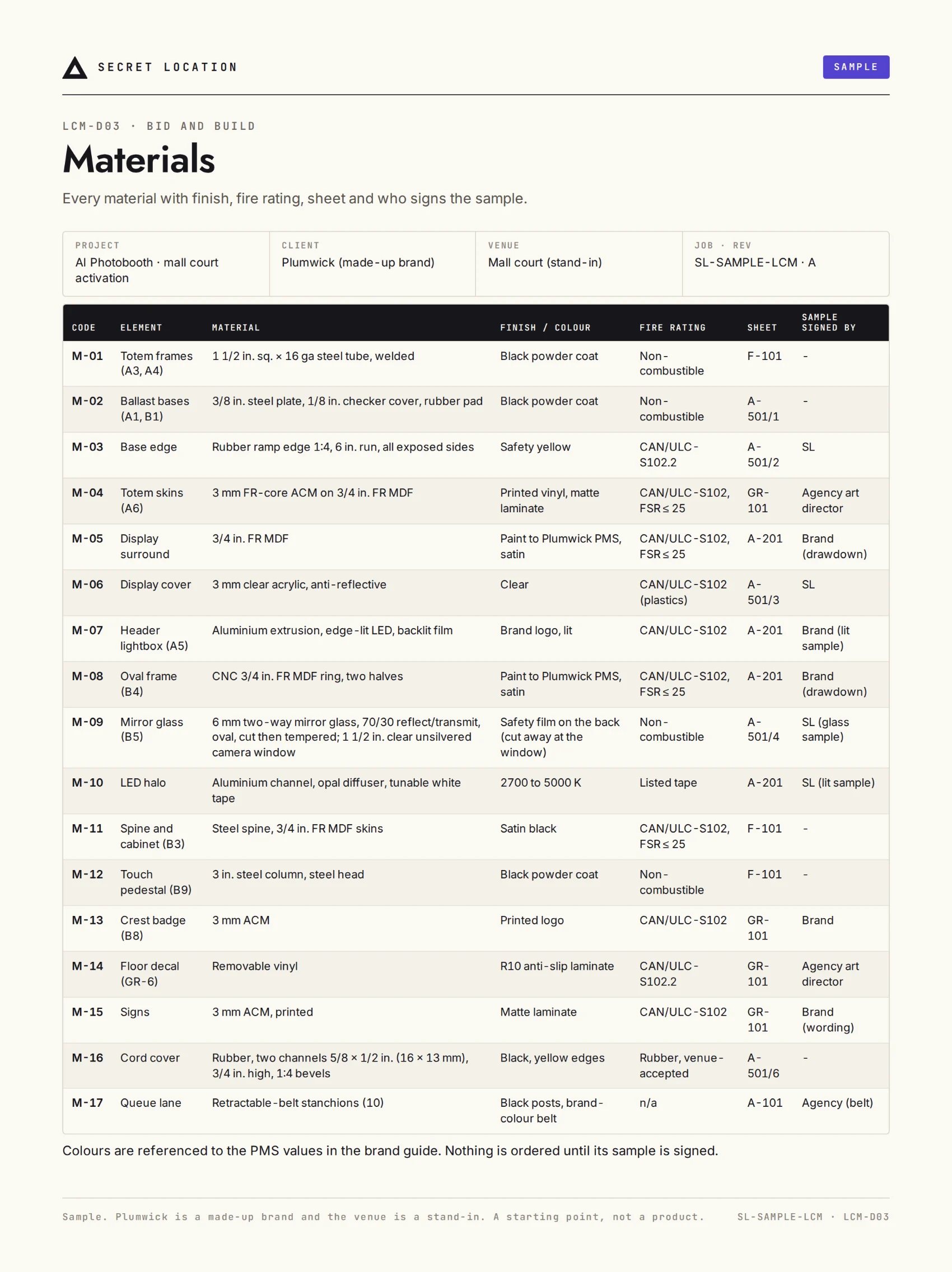
  2. 2Bid and BuildDesign, price and produce
  3. 3Show ReadyInstall, launch and run

STEP 1 OF 3 · PROVE THE IDEA

Proof of Play

Something your team can play, discuss and sign off before the physical build.

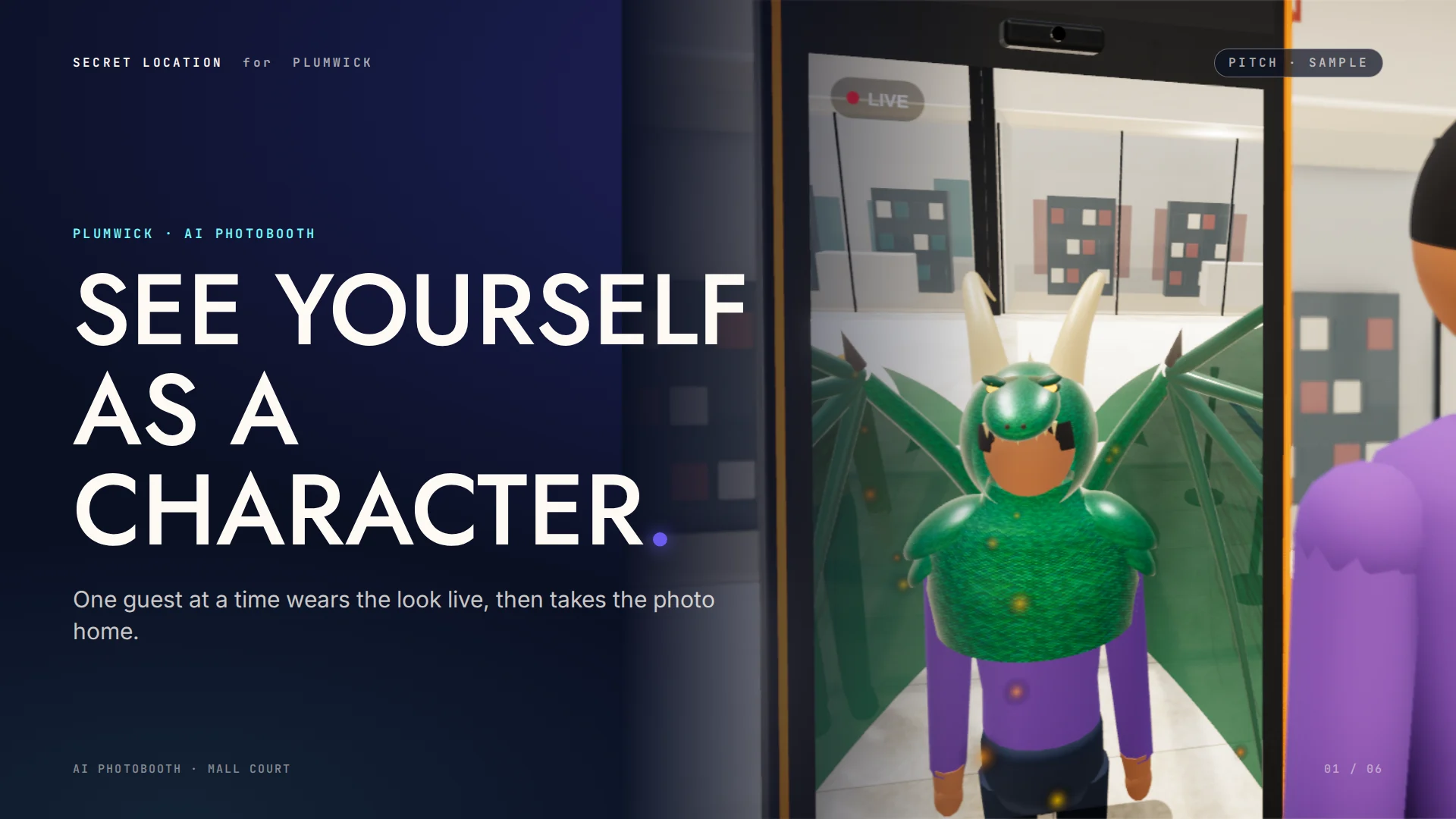
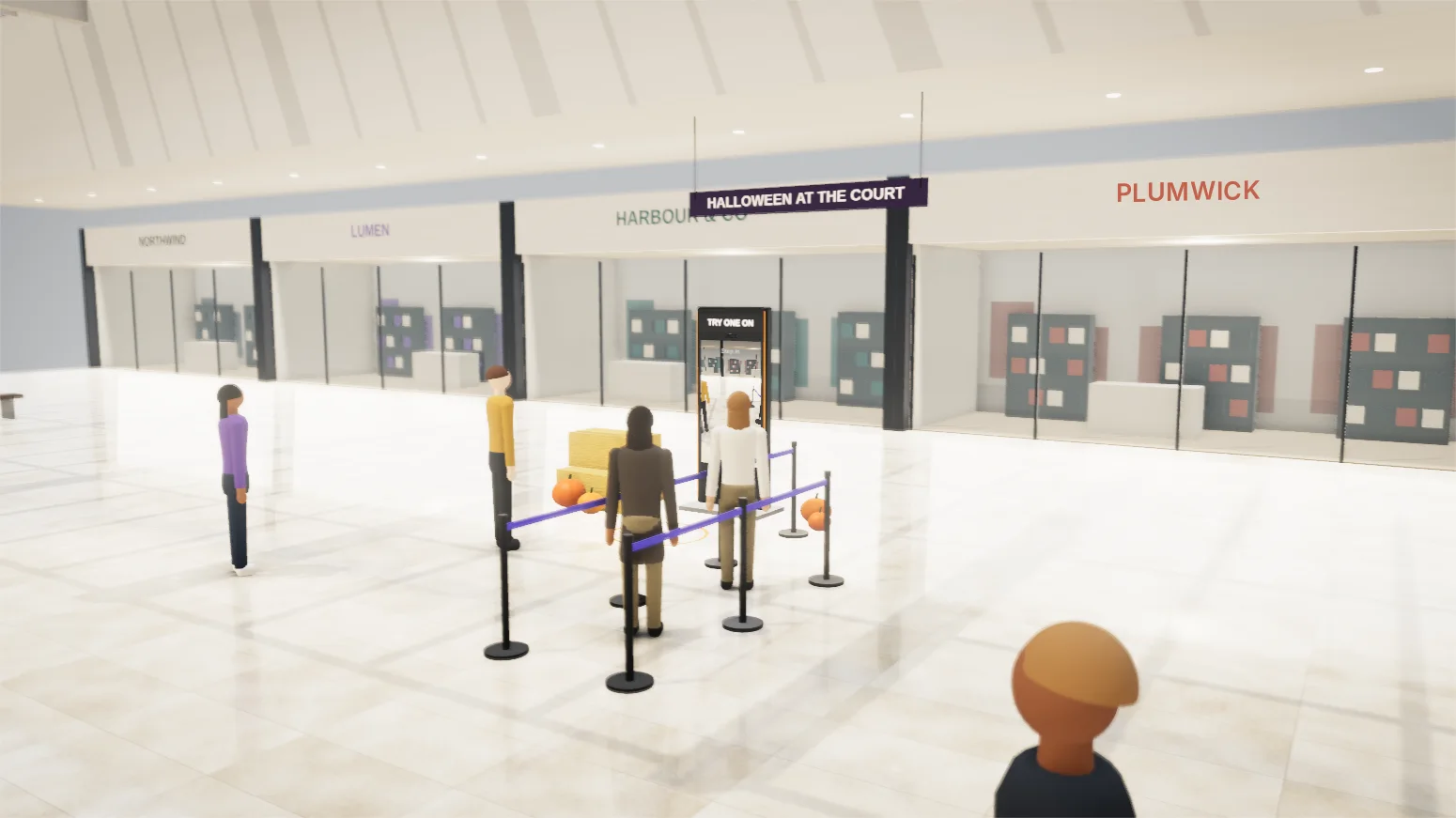
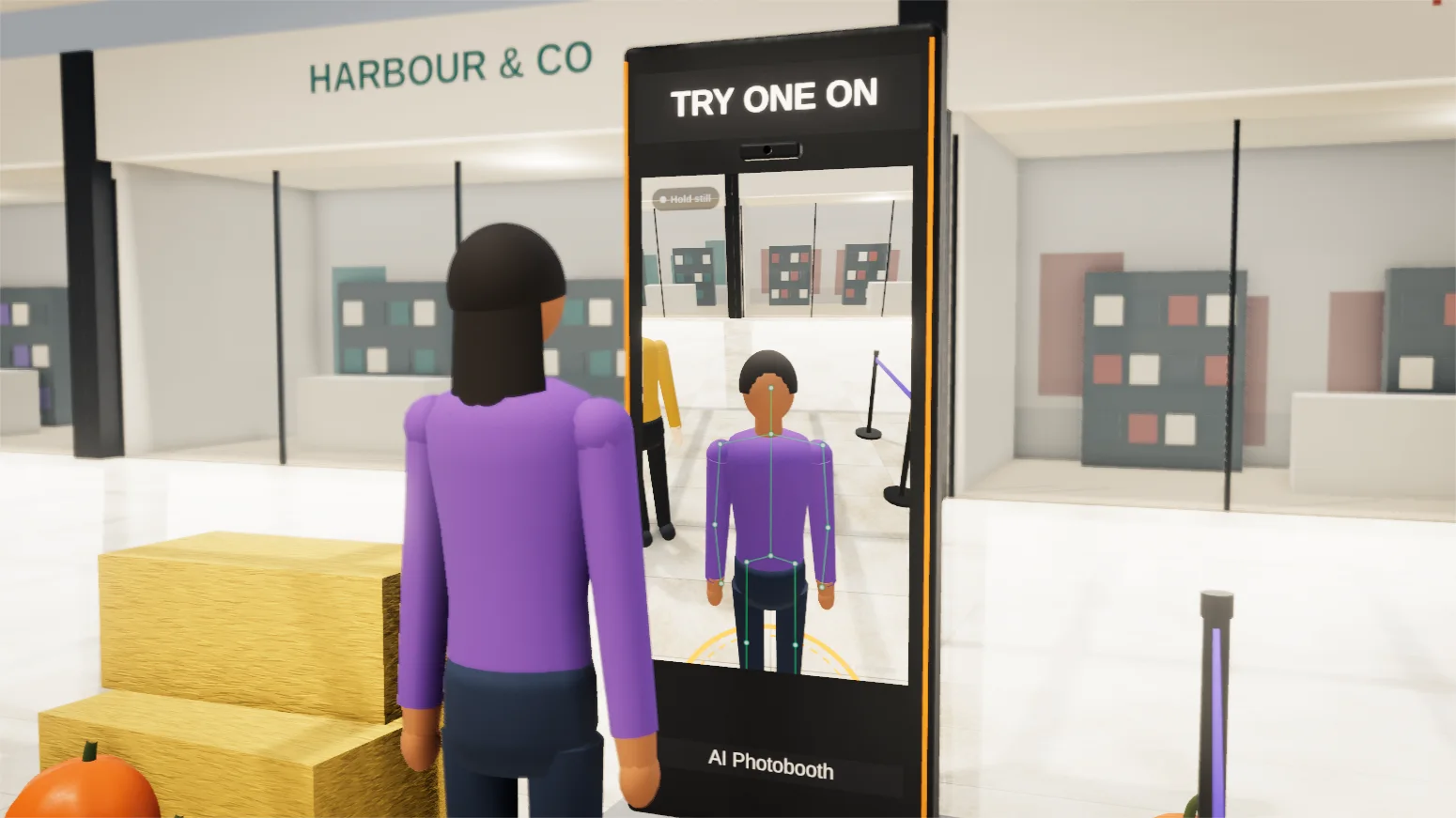
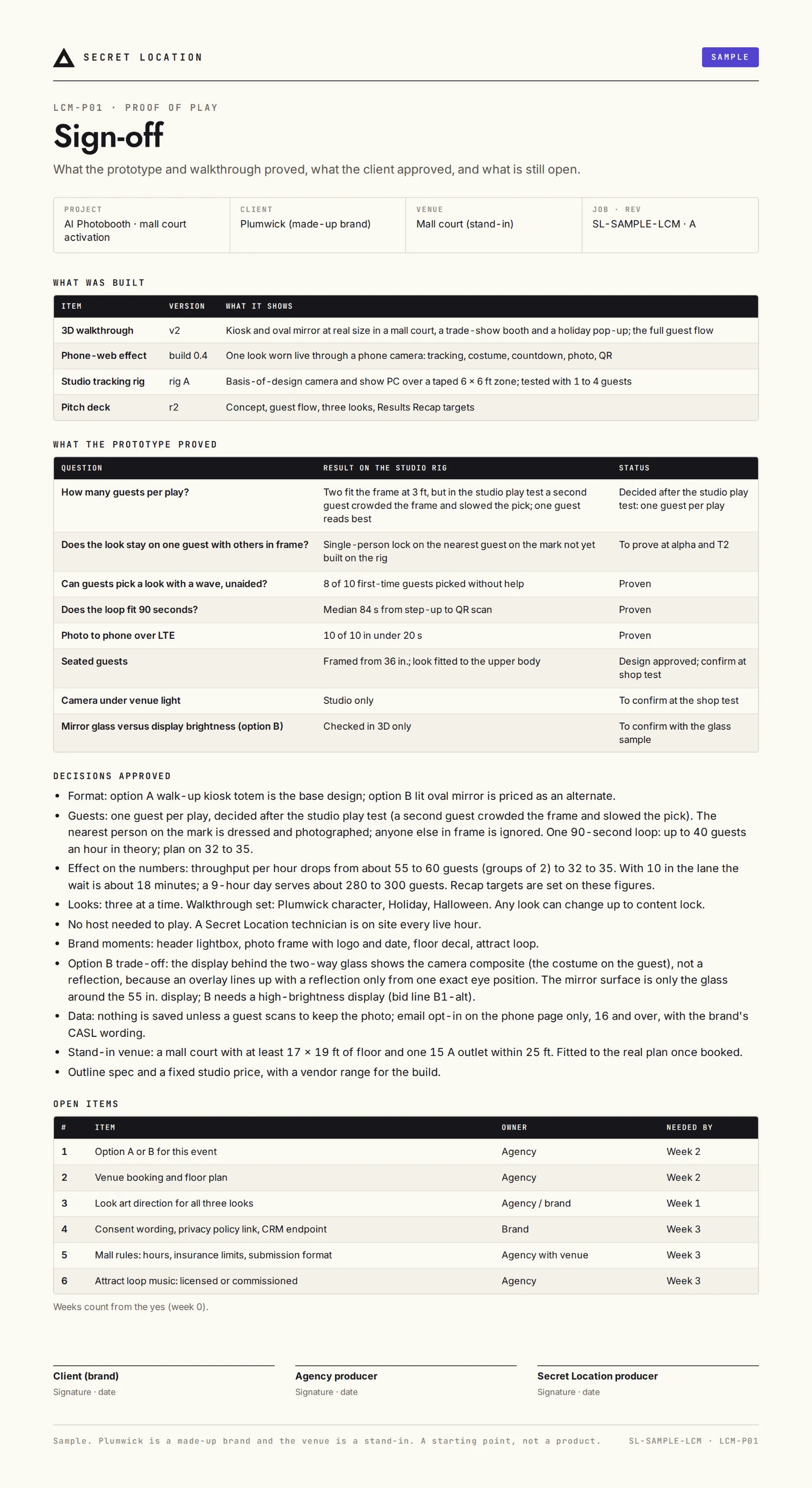
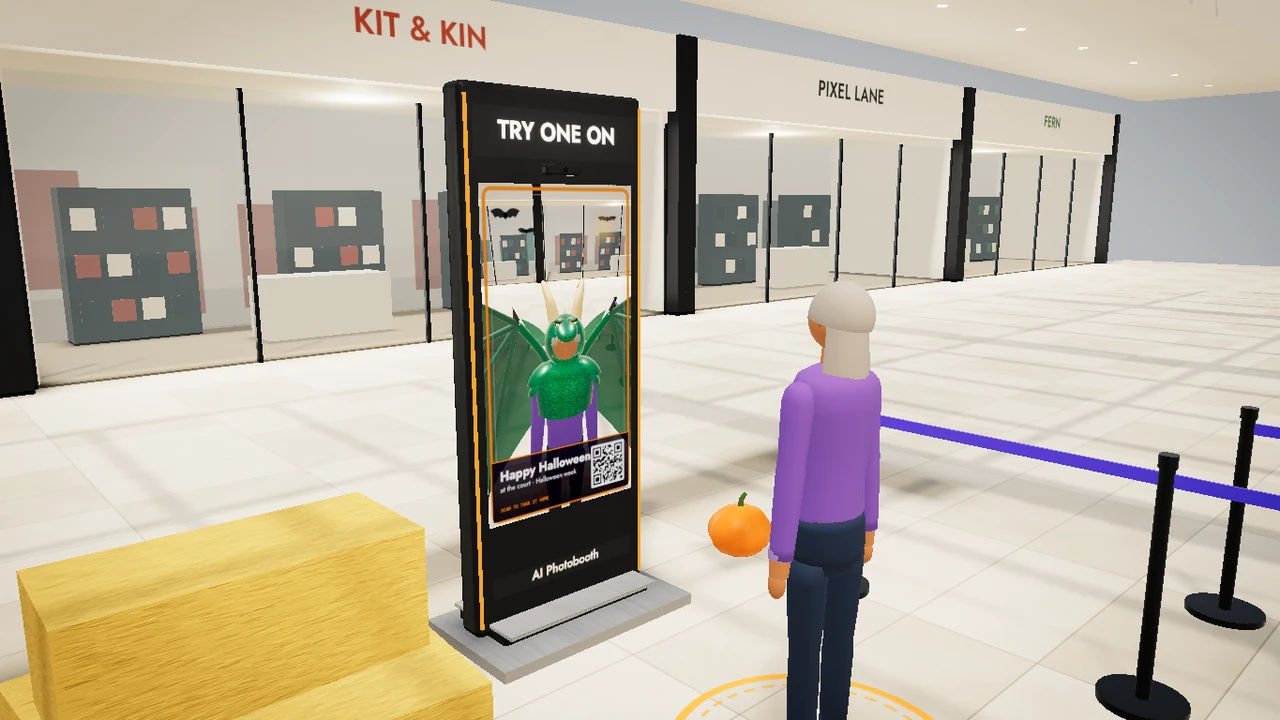
Illustrative 3D AI photobooth installation with a guest using the character mirror Play the sample prototype

Interactive sample · the store and character looks are stand-ins.

See the idea take shape

Illustrative sample · Plumwick, a fictional brand. These materials follow a single AI Photobooth concept.

Explore the interactive 3D walkthroughReview the sample sign-off

Proof of Play · Your playable virtual prototype

Play it before
you build it.

Try the core mechanic. Explore a separate virtual walkthrough. Refine the experience before committing to the physical build.

$15,000CAD + HST

Credited in full to a build signed within 90 days of the final review.

Start with Proof of Play
  1. Concept & art direction

    The story, audience, guest action and visual direction for the proposed experience.

  2. Playable core mechanic

    A working prototype on our engine. It tests the interaction; final hardware integration, complete content and show-day reliability belong to the build.

  3. A spatial walkthrough

    A 3D view in a representative space, reviewed separately from the mechanic. A venue-fit stage follows once the actual floor plan is available.

  4. Outline production specification

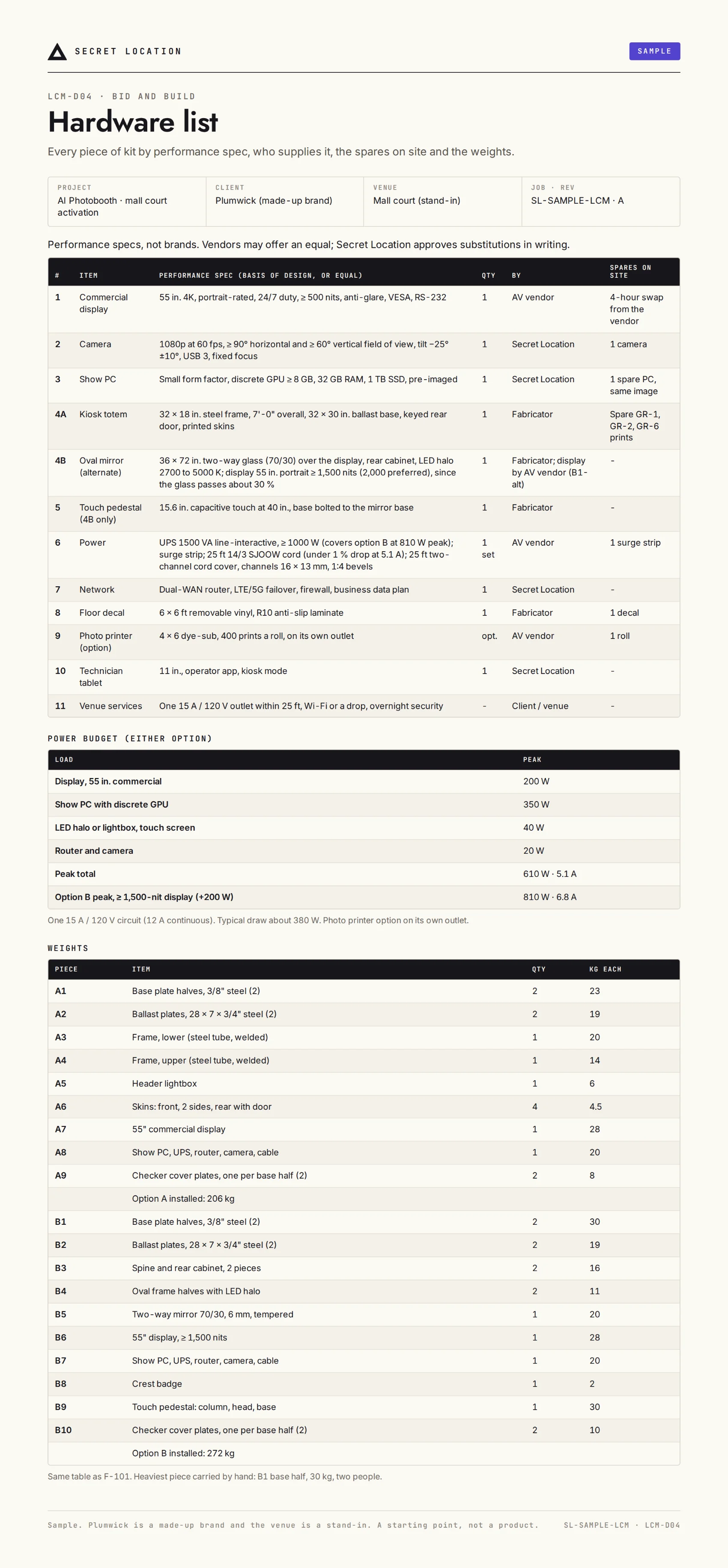
    Plan view, power class and hardware list. The detailed drawings and vendor bid package are produced in the build stage.

  5. A commercial build outline

    A fixed studio price and a vendor range for the agreed scope. AV and fabrication lines are fixed when the bids are awarded.

  6. One review round

    One review round included. A second round is $4,500 for up to three studio days.

Your decision

Sign off the creative direction and core interaction. Decide whether to commission the defined build.

See the sample sign-off

The terms, where you can see them.

Schedule
Two weeks of studio work, followed by one client review round: up to five business days for your feedback, then three studio days for changes. The elapsed schedule includes your review window and is agreed at kickoff.
Payment & credit
75% up front; 25% before handoff. Credited in full to a build signed within 90 days of the final review. The next build is a separate decision.
Sharing & access
Hosted playable link: $1,500 add-on. Access duration and permitted sharing are written into the scope before work begins. The standard review and handoff format are also confirmed in the proposal.
If you stop after the review
There is no automatic commitment to a build. The proposal identifies the deliverables you keep, the format and the licence. Source project files are a separate handover option.

Optional formats in the current package: studio playtest $3,500; boardroom demo $2,500. All prices CAD + HST. Additional spaces, modes, rush work and source handover are scoped separately.

Once the direction is approved

The idea becomes
a production plan.

Each stage leaves your team with a clear set of outputs and a decision to make.

Illustrative sample · Plumwick, a fictional brand. Sample figures and schedules describe this example; your production scope is agreed for your venue and brief.

STEP 2 OF 3 · MAKE IT BUILDABLE

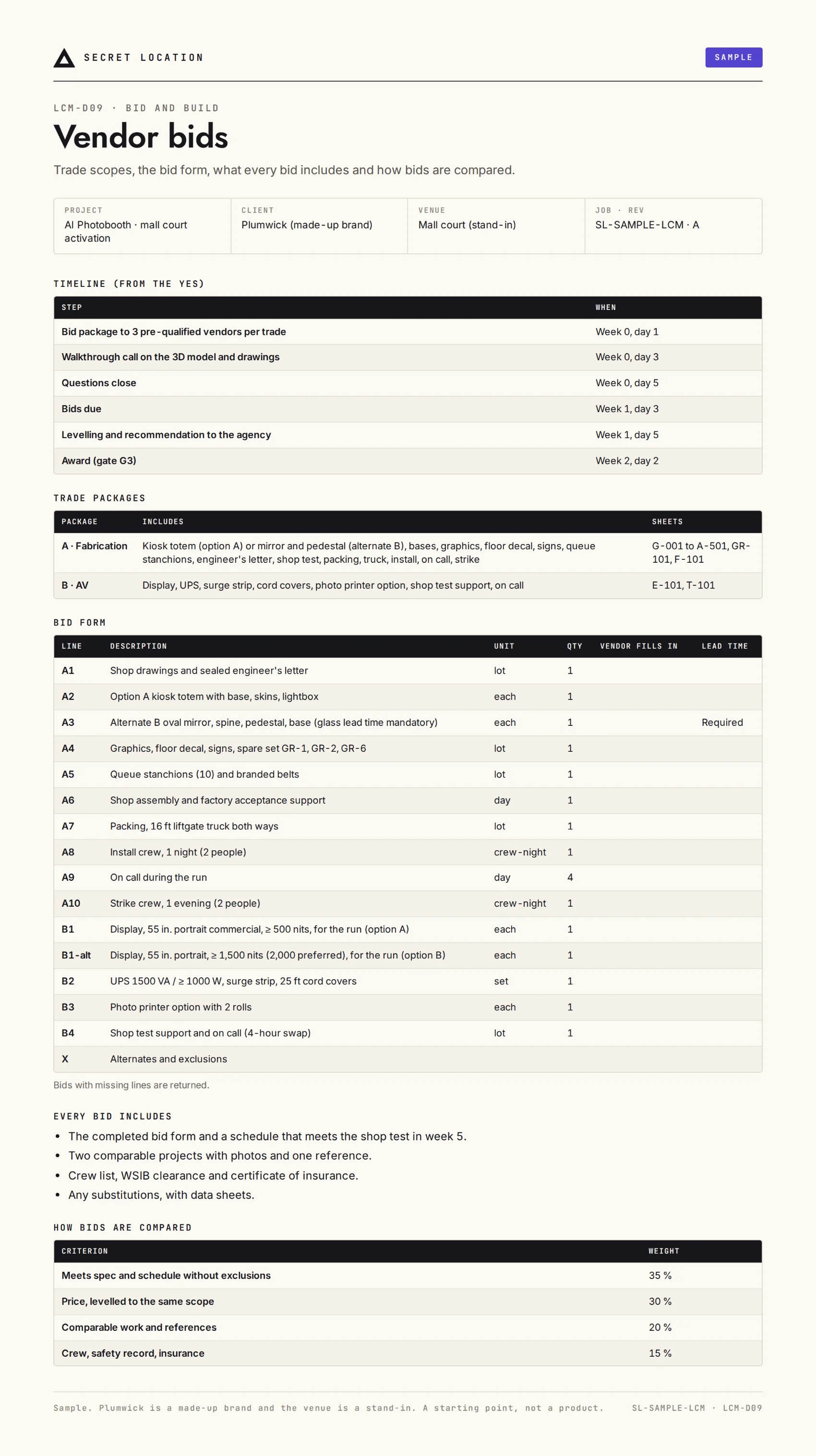
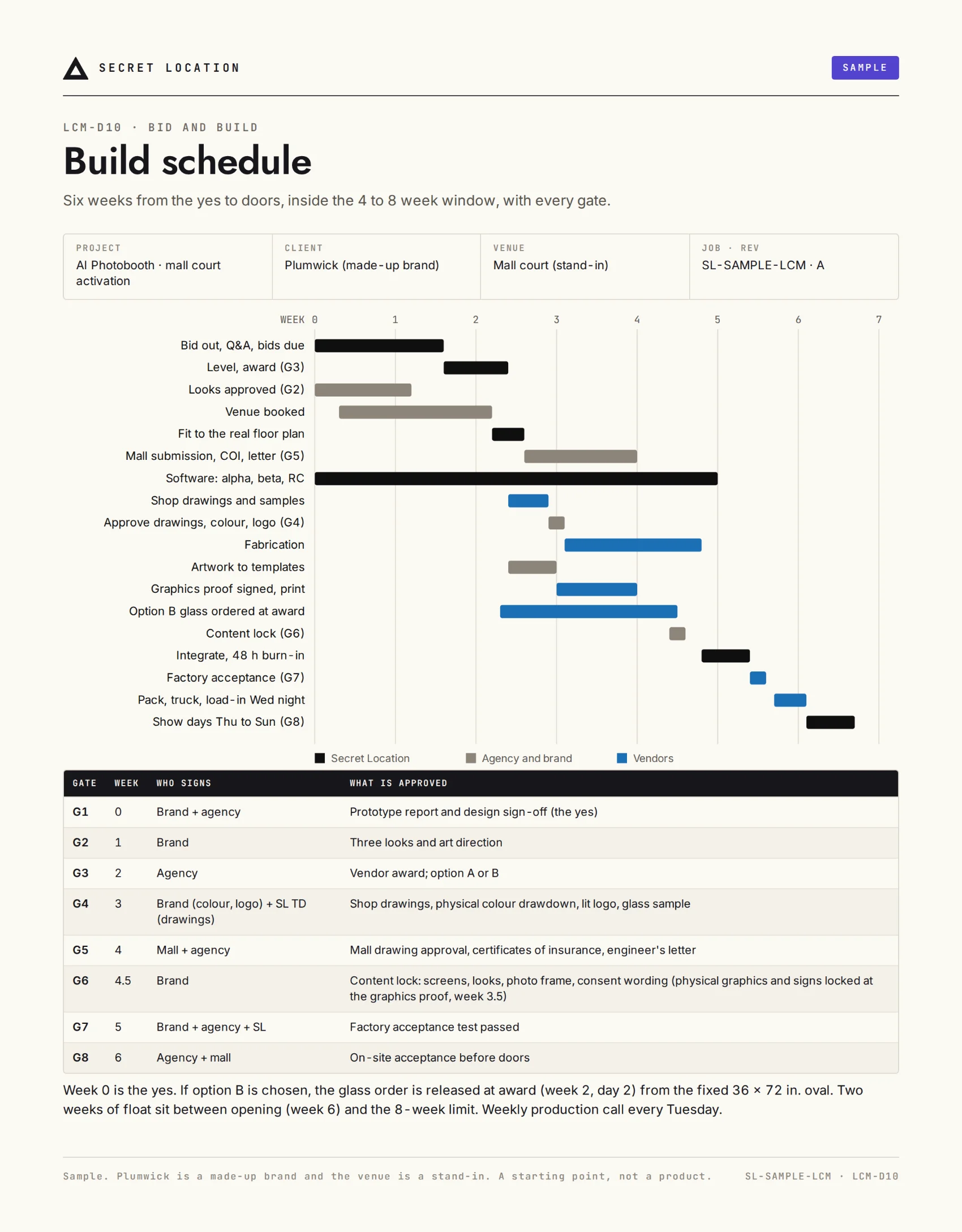
Bid and Build

A build your team can see, your vendors can quote and your producer can schedule.

Your decision: approve the defined studio scope, materials and itemized vendor bids.

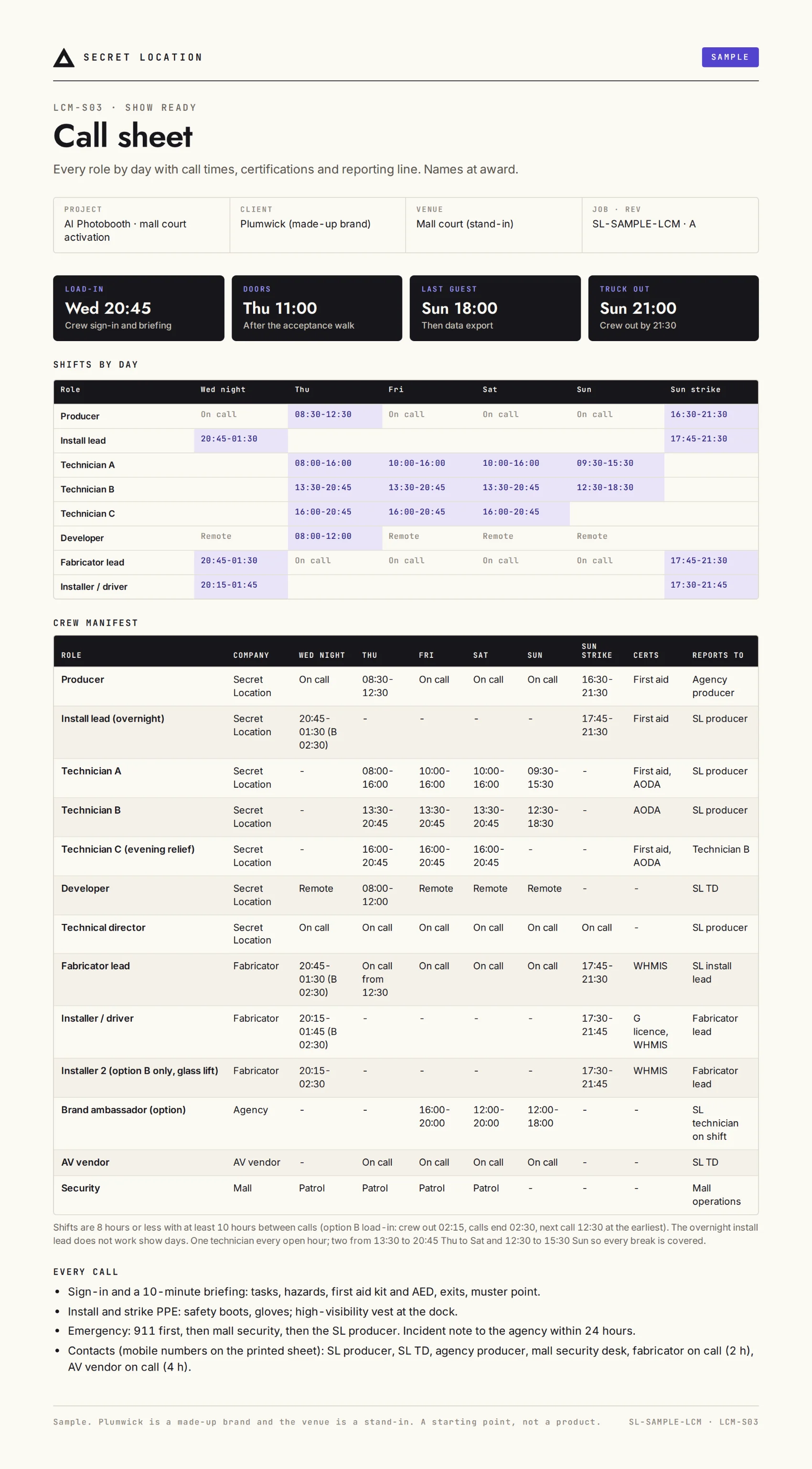
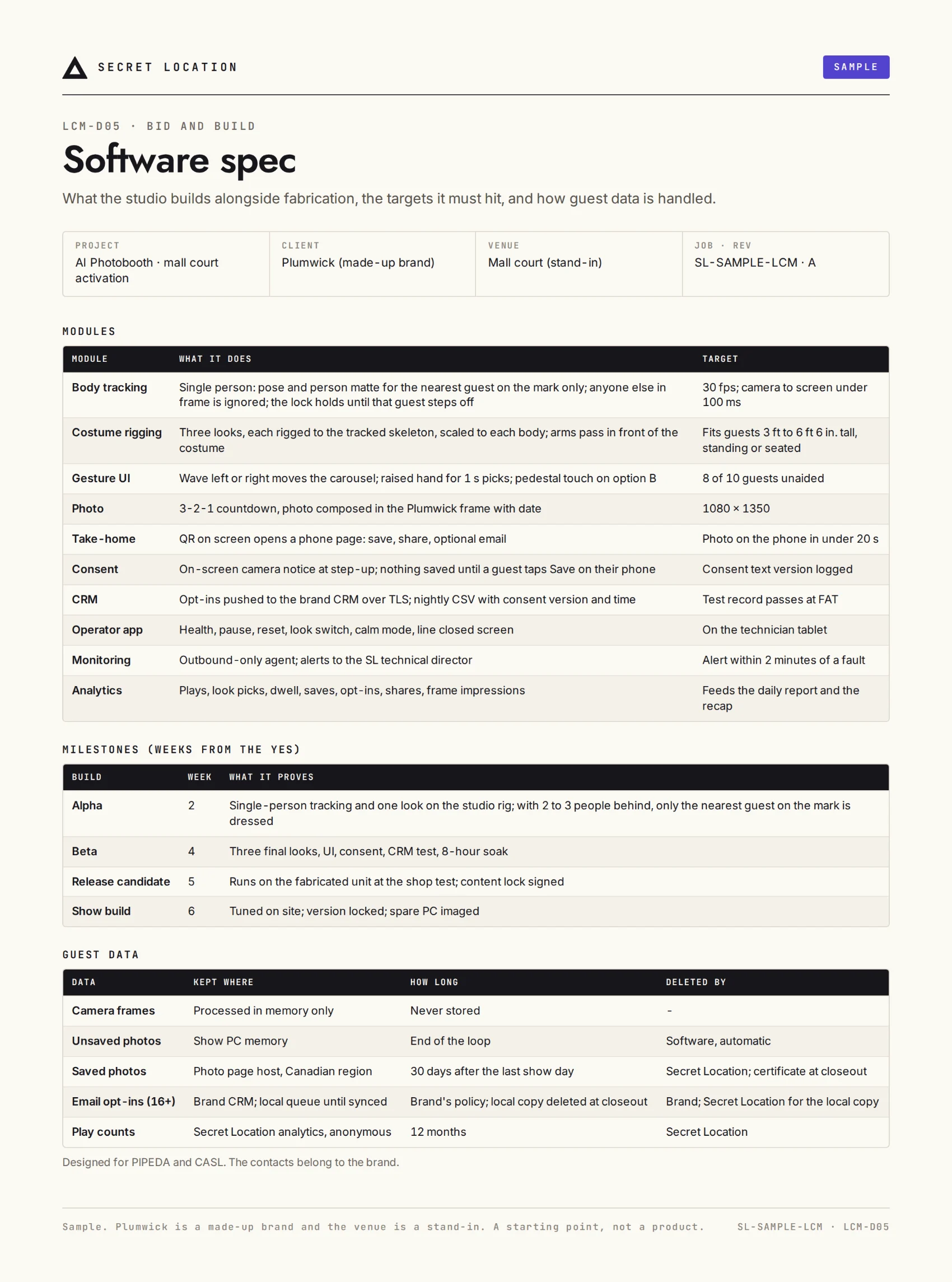
Creative, software, AV and fabrication move together, with weekly reviews, integration testing and a final run-through. The plan includes a 48-hour stress test before load-in. Lead time starts from the approvals and inputs listed in your proposal; venue access, approvals and fabrication affect the schedule.

STEP 3 OF 3 · OPEN WITH A PLAN

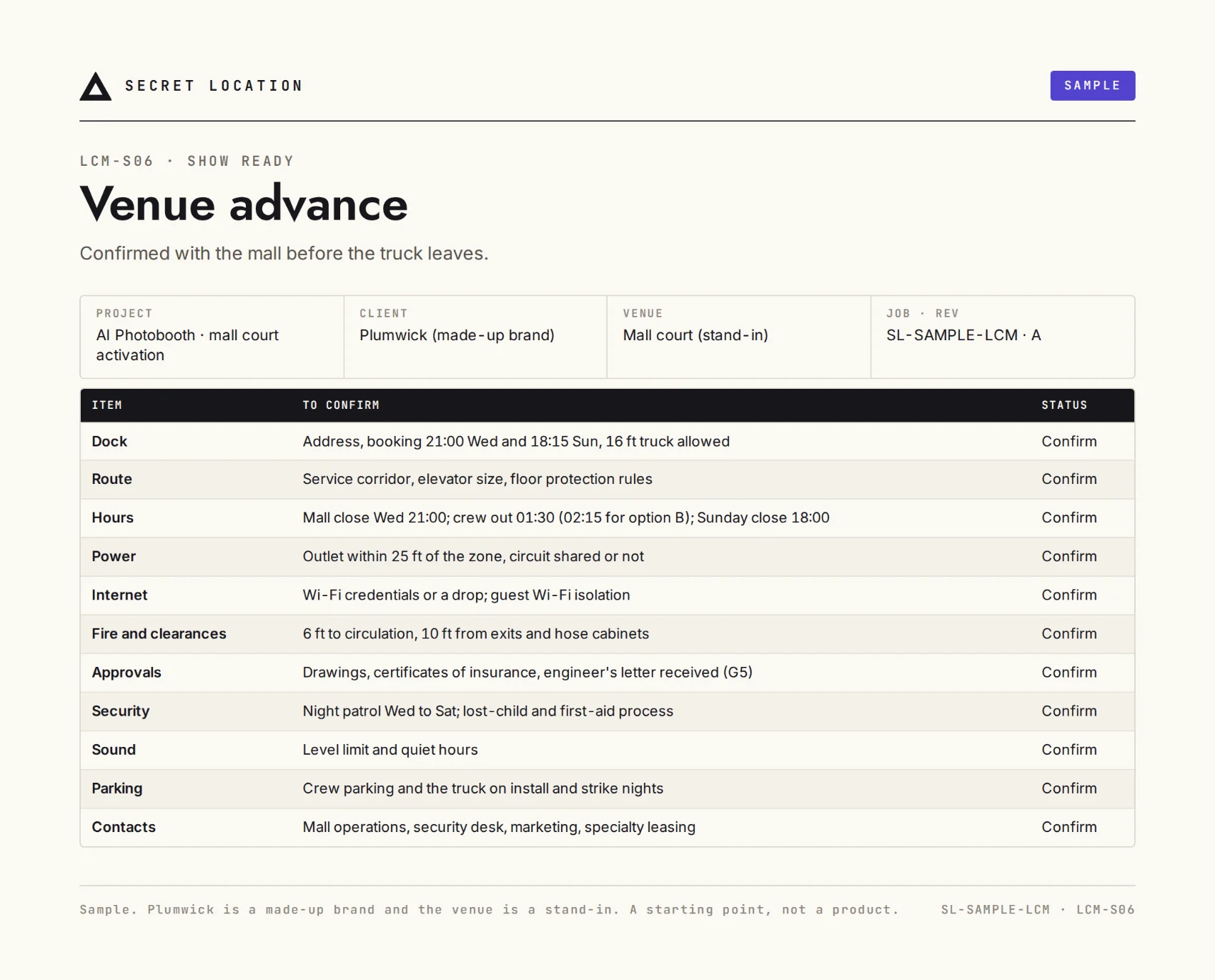
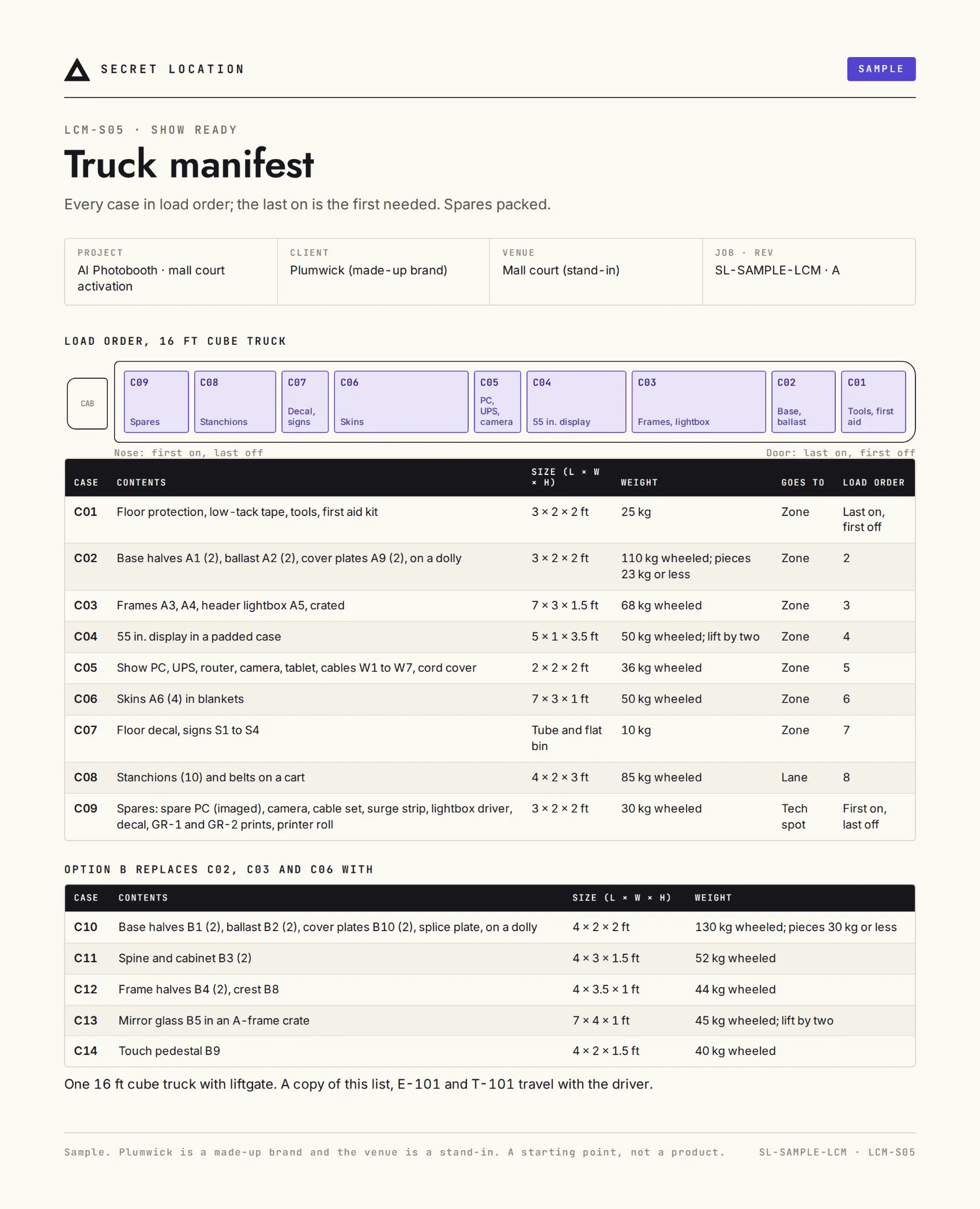
Show Ready

The crew knows the plan. The venue knows what is coming. Your team knows how the show performed.

Your decision: confirm readiness against the agreed brief and operating plan, then review the measured results.

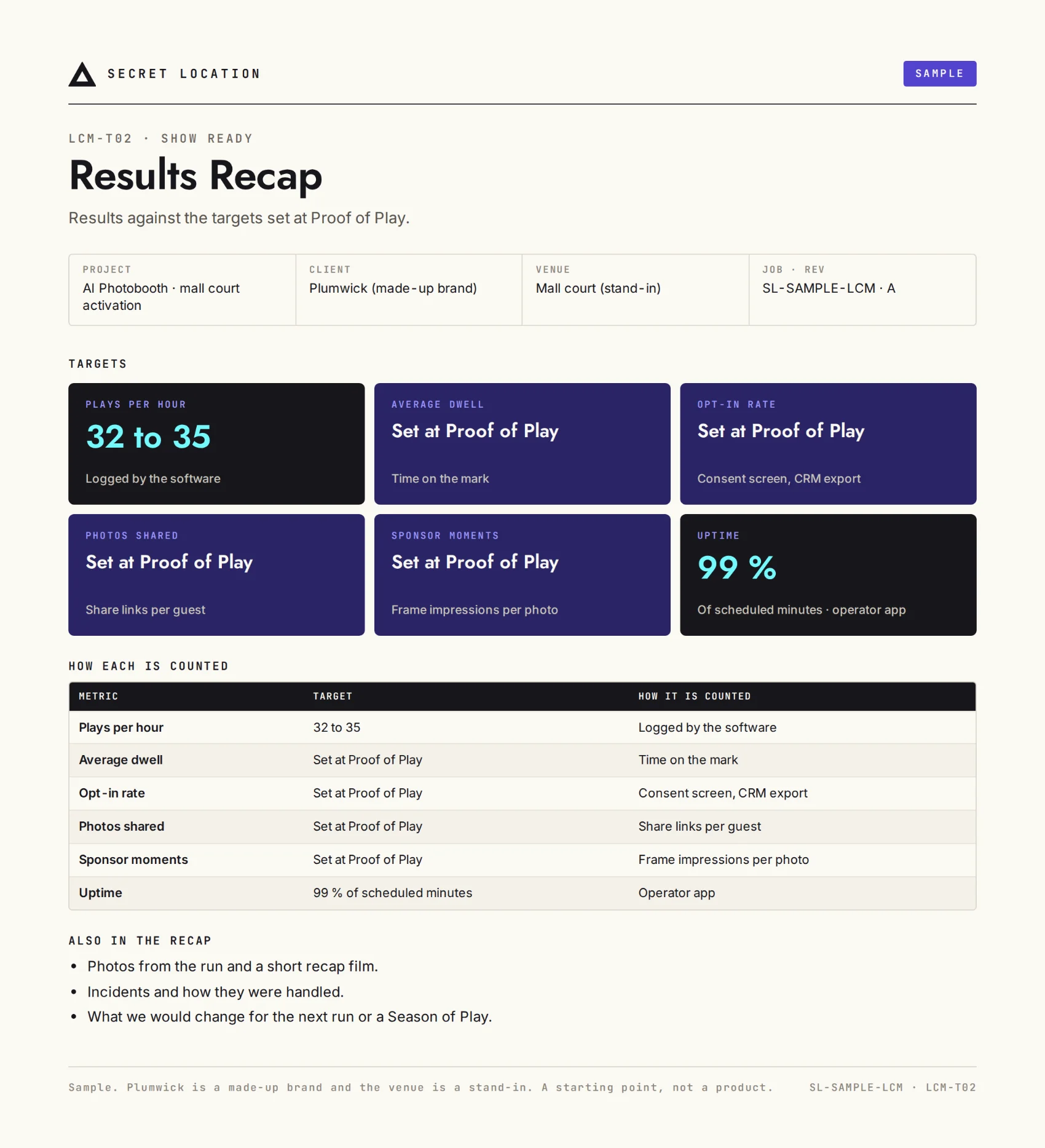
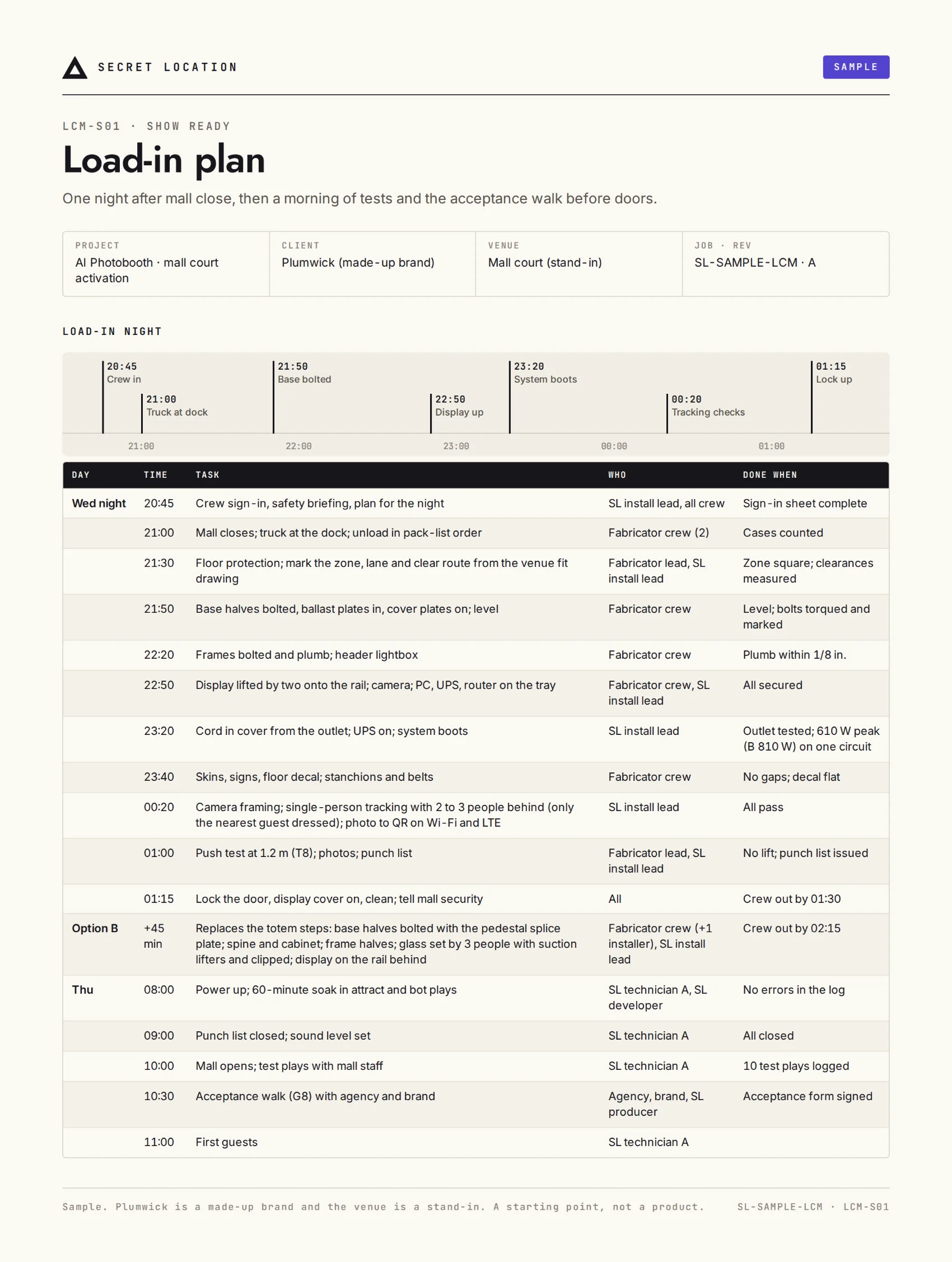
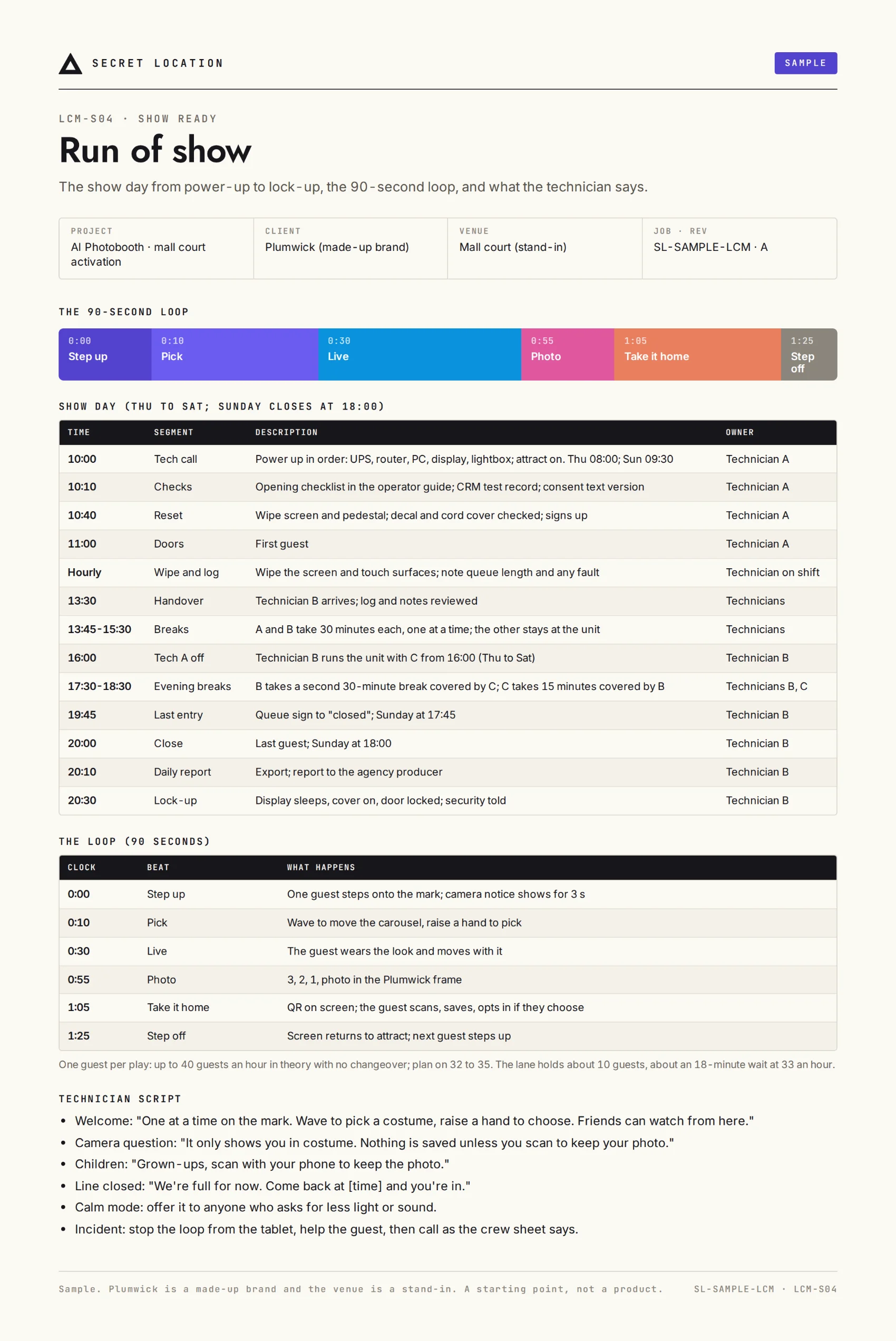
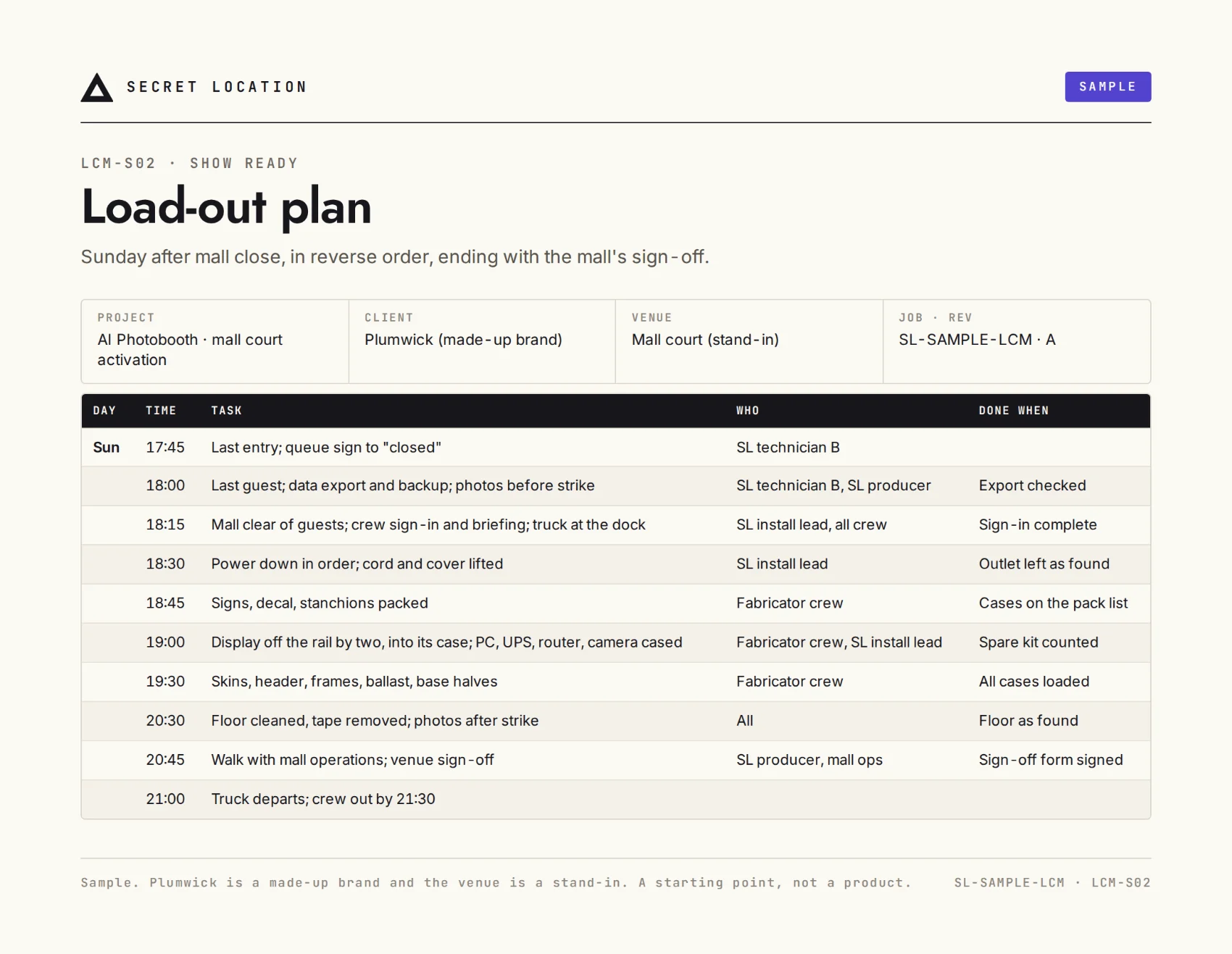
Load-in, a technician during the quoted live hours, hot spares and load-out are planned together. A Results Recap follows within 10 business days. Live days, crew and operating scope are stated in the proposal.

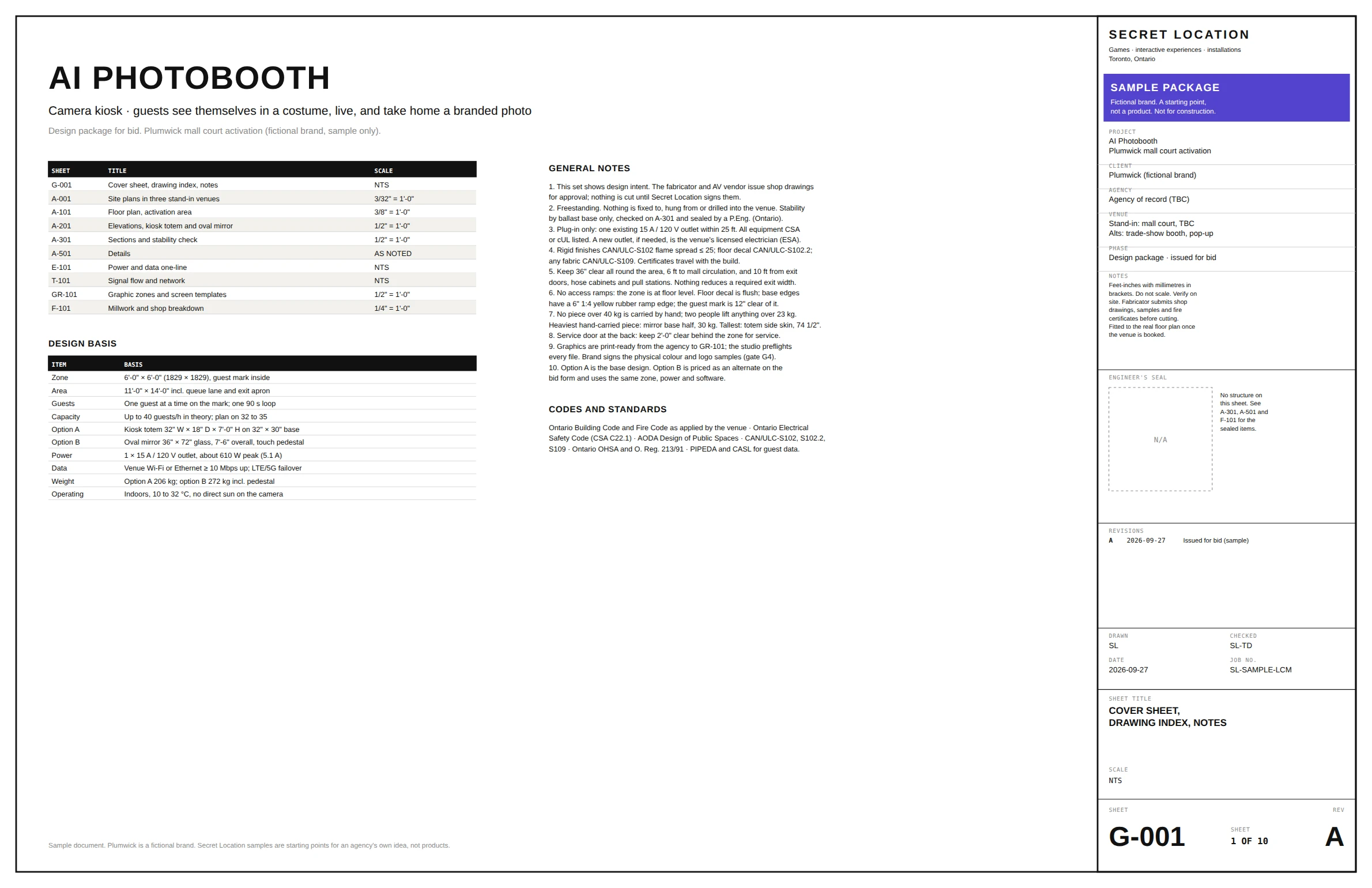
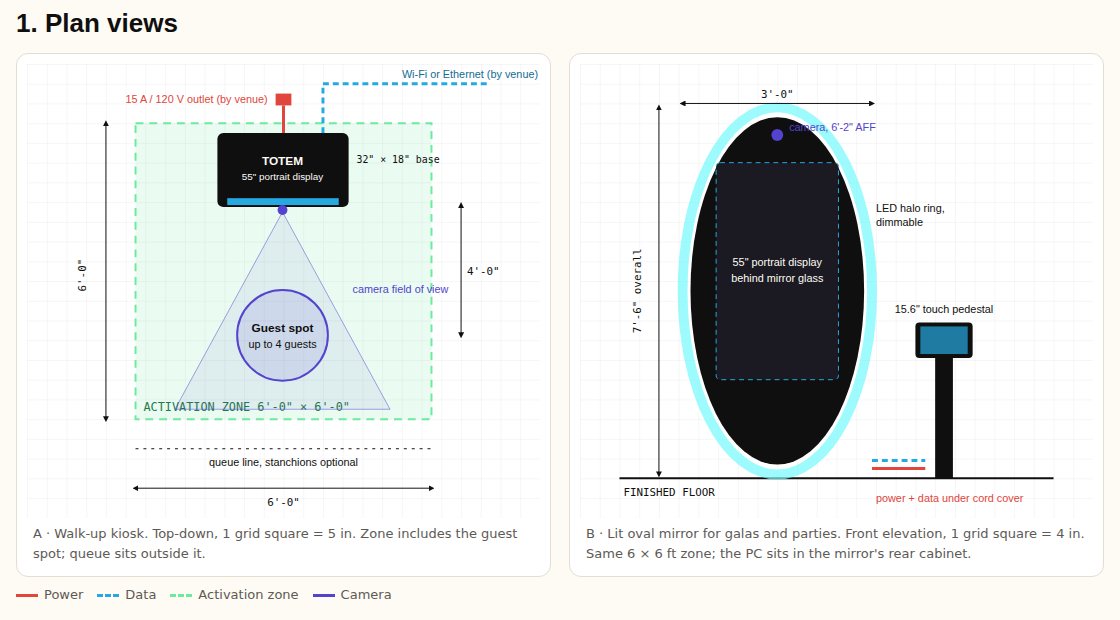
Illustrative plan views for a kiosk and mirror installation, showing guest space, camera, power and data
Illustrative build-pack extract · plan views for two costume-mirror configurations. This is a sample, not a specification for every experience.

Production clarity

What your producer needs.

  • One producer, named in the proposal, from brief to strike.
  • Plan views, hardware list and power budget.
  • Venue access, house labour and crew responsibilities.
  • Operating hours, staffing and a failover plan.
  • What is measured, how it is counted and any consent flow.
Talk through your production brief

Working together

Practical questions.
Straight answers.

Can we start with a proven interaction?

Yes. If the core interaction already works on one of our engines, we can scope the creative, venue requirements and production directly after a call. We recommend the starting point after reviewing your brief.

What is included in the budget?

The quote separates the studio scope from AV, screens, projection, fabrication and other vendor lines. Our engine kit—cameras, sensors and compute—is within the studio fee. Vendor bids are open-book and fixed at award. Live days, installation, travel, venue labour and repeat deployments are stated in the proposal so the full planning allowance is visible.

How do payments and ownership work?

Proof of Play: 75% up front and 25% before handoff. Builds: 50% before production, 35% at the midpoint and 15% before final delivery. You own your brand assets and custom art. The build includes a perpetual, royalty-free licence for that brand. Source-code and asset handover is a separate option: 25% of the project fee, minimum $10,000. Reusable studio engines remain licensed. Portfolio use needs your approval.

Can you work under our agency's name?

Yes. Your producer runs the client relationship; we work under your banner and NDA. The proposal confirms agency partner terms and credits. We do not contact your client without you.

What if the venue is not confirmed?

We can explore an idea in a representative space, then fit it to the real floor plan. A proposal identifies the venue information and approval dates needed to protect the schedule. House rules, union labour and access windows are included before vendor award.

What happens to guest data?

Participation and marketing consent are separate decisions. The plan defines what is collected, where processing happens, retention, sharing and deletion for the chosen experience. Guest-facing consent is reviewed with your team before release. A camera game does not, by itself, mean a guest has opted into marketing.

How is accessibility planned?

We identify seated or lower-mobility alternatives, physical access and clear instructions during design. The chosen interaction, venue and guest audience determine the actual accessible route; it is specified and reviewed before installation.

What will the Results Recap tell us?

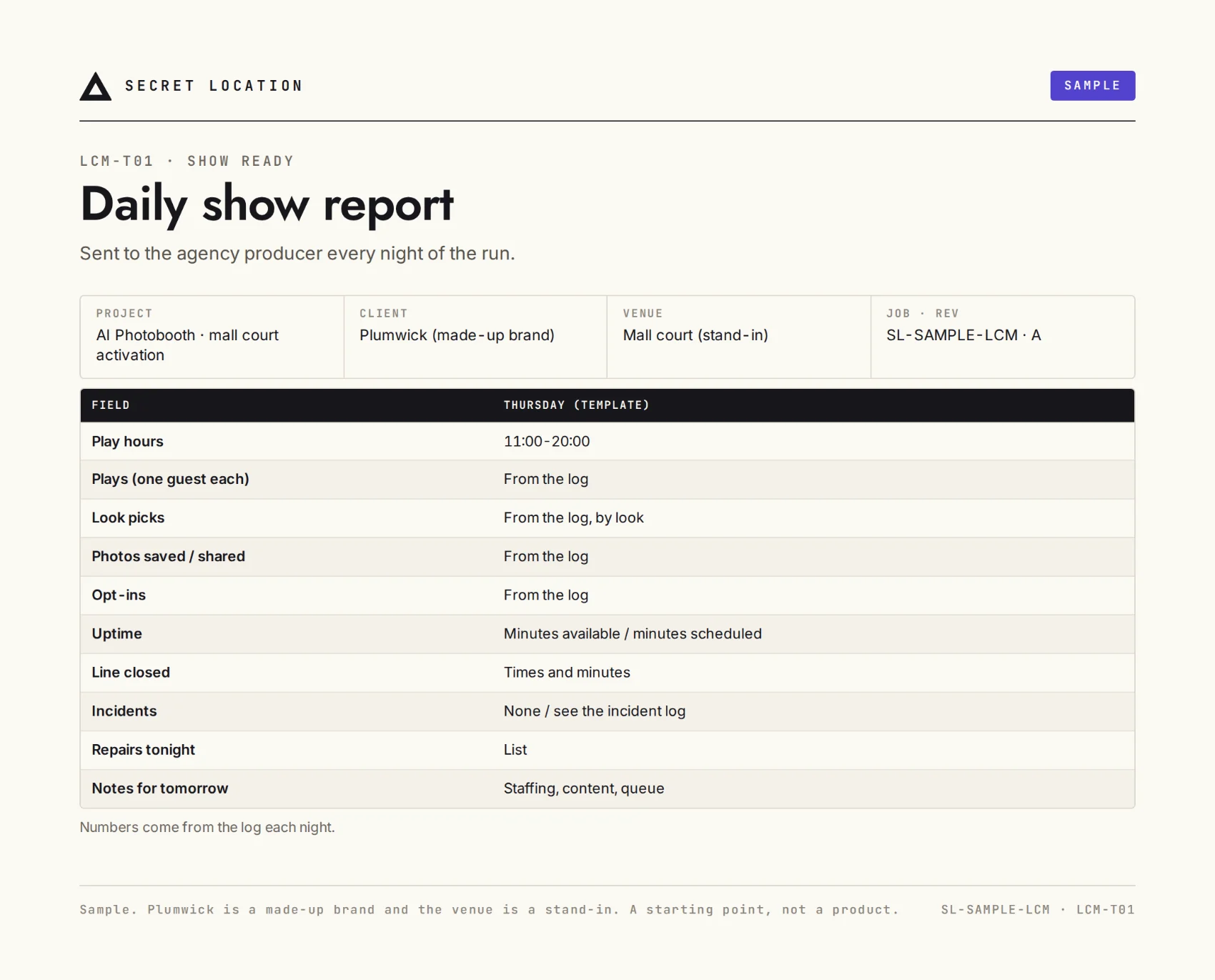
We agree the target and the measurement definition before the build: for example, completed plays, recorded dwell or voluntary opt-ins. The recap separates observed events from estimates. A generated share link is not proof that someone posted it, and participation is not a promise of sales.

Can we run it again?

Yes. Another event, a season or a second location can build on the same engine. Hosting, storage, hardware, crew, maintenance and creative changes are scoped for that deployment; they are not implied by the initial installation price.

Your next project

Start with the brief you have.

An audience, a date, a floor plan—or an idea worth testing. Tell us where you are and we will recommend the next useful step.